Ever walk past a charming Durham bungalow or a grand porch with gingerbread trim and wonder what you’re looking at? If you love the character of older homes or you’re curious how architecture shapes value, you’re in the right place. In this guide, you’ll learn how to spot Durham’s most common home styles, where they tend to appear, and what that means for maintenance, renovation, and resale. Let’s dive in.
Durham’s architecture at a glance
Durham’s housing story follows its growth. Tobacco and textile industries, Duke University, and early streetcar lines sparked a building boom from the late 1800s through the 1930s. That created Victorian homes, bungalows, foursquares, and garden suburbs with revival styles.
After World War II, the city expanded with Minimal Traditional, Cape Cod, and Ranch homes. From the 1940s through the 1970s, Mid‑century Modern design joined the mix. More recently, downtown’s brick warehouses found new life as lofts, and contemporary infill and townhomes added options near jobs and amenities.
How to spot key Durham styles
Below are the styles you’ll see most often, with quick visual cues, common locations, and owner notes.
Queen Anne and Late Victorian (1880s–1910s)
Queen Anne homes are about texture and asymmetry, with steep roofs, front gables, and sometimes turrets. Many feature wraparound porches and decorative shingles. You’ll spot ornate trim and bay windows on higher‑style examples.
- Look for: Asymmetrical façade, steep roof, spindlework, wraparound porch, bay windows, occasional tower.
- Where you’ll see it: Near downtown and early streetcar corridors, including parts of Trinity Park and Morehead Hill.
- Owner notes: High character and often older systems. Plan for porch and foundation repairs and potential mechanical upgrades. Historic designation can guide exterior changes.
Colonial Revival (1890s–1940s)
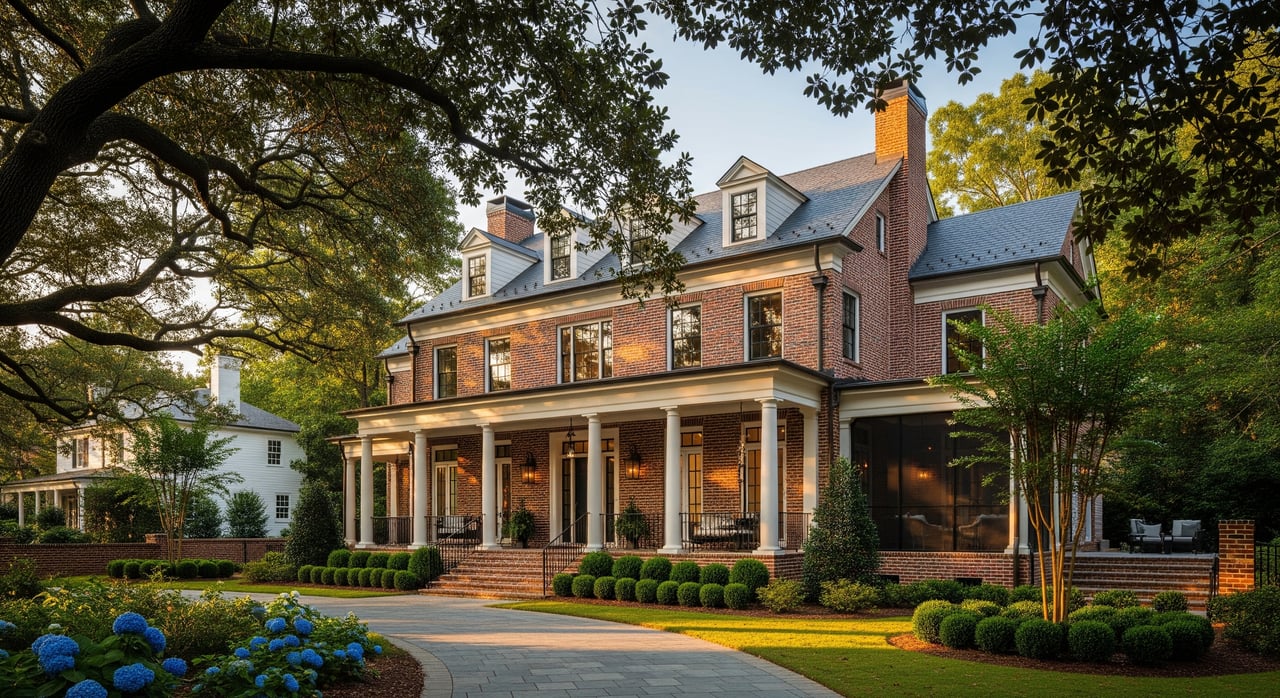
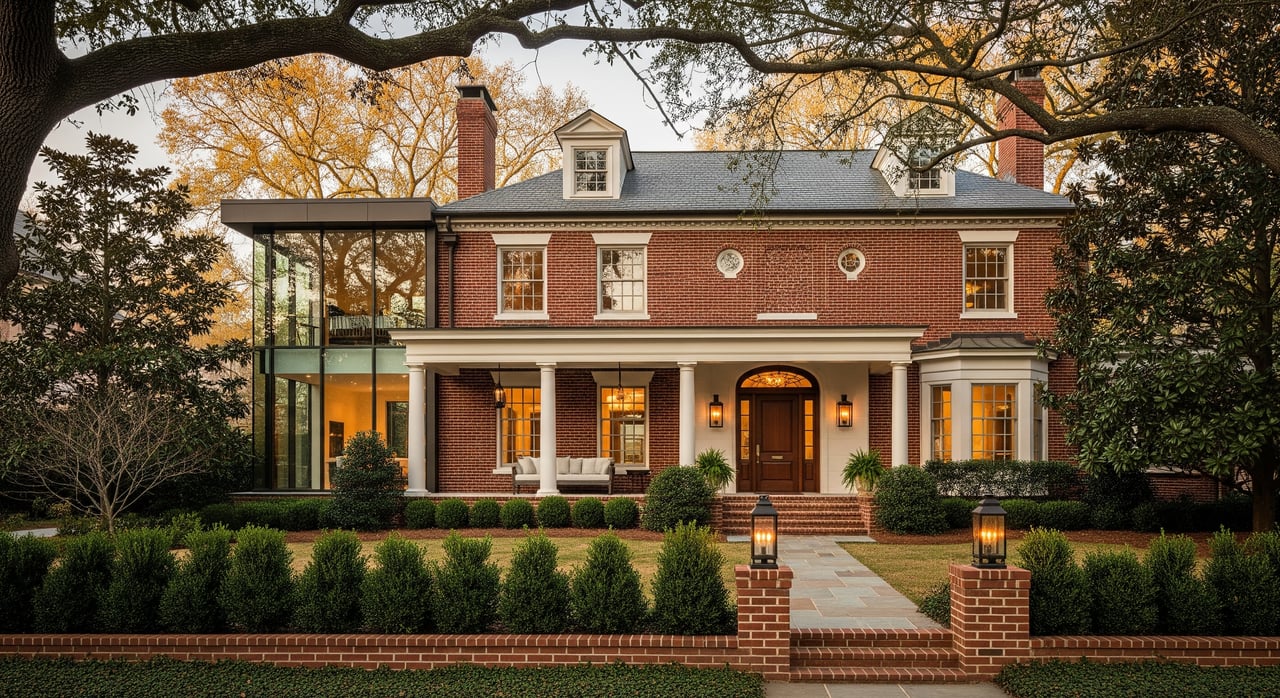
Colonial Revival reads as classic and balanced, with symmetrical fronts, multi‑pane windows, and columned entries. You’ll find both modest versions and high‑style homes.
- Look for: Symmetry, columned portico or entry porch, multi‑pane double‑hung windows, pediments and pilasters.
- Where you’ll see it: Forest Hills, Watts‑Hillandale, and Hope Valley.
- Owner notes: Often aligns with what buyers call “traditional.” Many homes work well with thoughtful additions.
Craftsman and Bungalow (1905–1930s)
Craftsman bungalows favor simple forms and hand‑worked details. Expect low‑pitched gables, deep eaves with exposed rafters, and tapered porch columns on brick piers. Inside, original woodwork and built‑ins are common.
- Look for: Low gabled roof, exposed rafters, wide front porch, tapered columns, one to one‑and‑a‑half stories.
- Where you’ll see it: Old West Durham, Watts‑Hillandale, and other former streetcar neighborhoods.
- Owner notes: Interiors often retain built‑ins and wood trim that buyers love. Many homes need electrical, plumbing, and HVAC updates.
American Foursquare (1895–1930)
The Foursquare is a practical two‑story box with big porch energy. The plan is efficient, with four rooms per floor, and a low‑hipped roof with a central dormer.
- Look for: Boxy two‑story form, wide front porch, hipped roof with central dormer, balanced window placement.
- Where you’ll see it: Streetcar suburbs and infill throughout Durham.
- Owner notes: Flexible layouts and generous rooms make great renovation candidates.
Tudor Revival (1920s–1940s)
Tudor homes bring storybook rooflines and masonry detail. You’ll see steep gables, brick or stucco walls, decorative half‑timbering, and tall, narrow windows.
- Look for: Steep roof, arched doors, half‑timbering, prominent chimney, casement windows.
- Where you’ll see it: Higher‑end pockets like Forest Hills and Hope Valley.
- Owner notes: Roof and chimney care is a common maintenance item. Many homes have higher‑end finishes.
Mediterranean and Spanish Revival (1920s–1930s)
Less common in Durham, these homes stand out with tile roofs and stucco walls. Arched entries and windows add curb appeal.
- Look for: Low‑pitched red tile roof, stucco exterior, arched openings.
- Where you’ll see it: Select examples in garden suburbs, including Forest Hills.
- Owner notes: Rare style that draws attention. Roofing and stucco details are key to upkeep.
Minimal Traditional, Ranch, and Cape Cod (1930s–1950s)
Post‑war growth brought smaller, simplified traditional homes and single‑story ranches. Cape Cods add steep roofs and central chimneys.
- Look for: Minimal Traditional with modest trim and compact forms; Ranch with long, low, single‑story plans; Cape Cod with steep roof and symmetry.
- Where you’ll see it: Post‑war subdivisions in north Durham and on the city’s edges.
- Owner notes: Good candidates for additions or interior refreshes. Many benefit from insulation and system upgrades.
Mid‑century Modern (1940s–1970s)
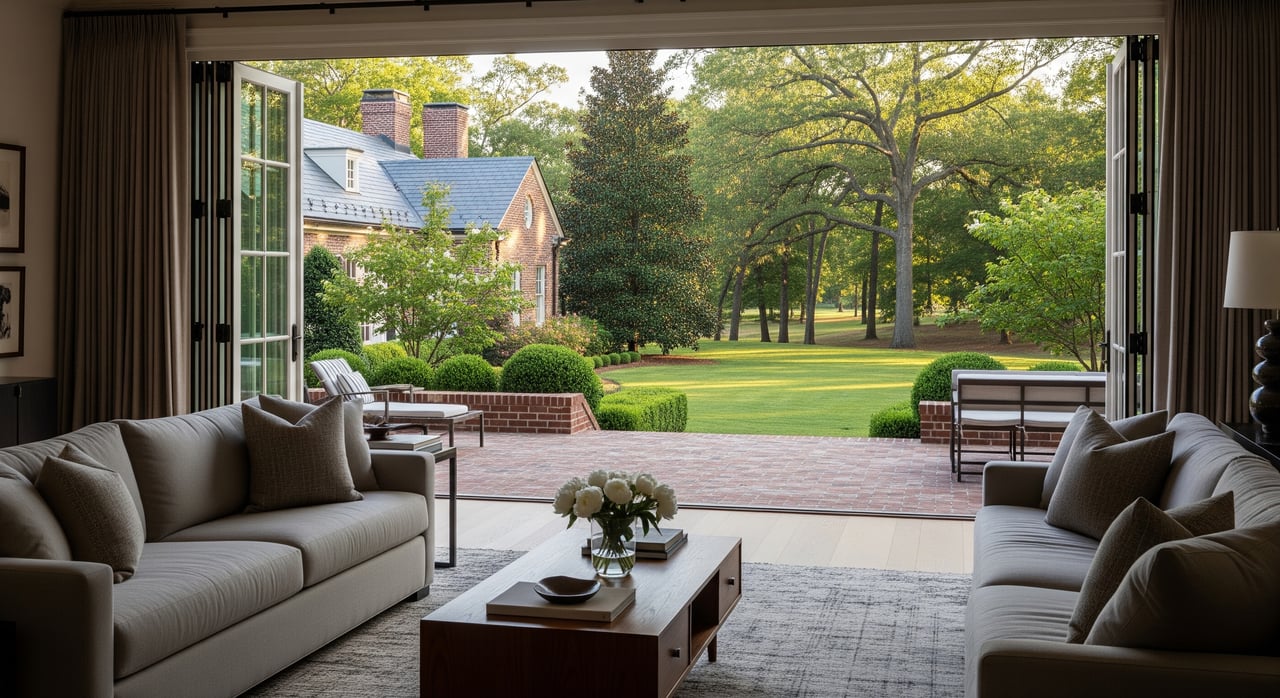
Mid‑century homes celebrate horizontal lines and light. Think large windows, integrated indoor‑outdoor living, and open floor plans. Some use flat or shed roofs.
- Look for: Wide eaves, big glass, open layouts, strong connection to the site.
- Where you’ll see it: Scattered in mid‑century subdivisions, with some architect‑designed homes near Duke and Forest Hills.
- Owner notes: High buyer interest for the look. Window and insulation improvements are common.
Adaptive reuse, lofts, and contemporary infill (late 20th–21st century)
Durham’s industrial past lives on in modern lofts and townhomes. You’ll find exposed brick, tall ceilings, and large windows in converted warehouses.
- Look for: Open plans, exposed materials, tall windows, modern systems.
- Where you’ll see it: American Tobacco District, Brightleaf Square, and downtown conversions.
- Owner notes: Often part of HOA communities with modern building systems. Industrial character adds appeal.
Vernacular, Shotgun, and Folk forms (late 19th–early 20th)
These homes are modest and practical. Shotgun houses are typically single‑pile with rooms in a line.
- Look for: Simple forms, straightforward roofs, minimal trim.
- Where you’ll see it: Historically in Hayti and parts of North Durham. Some remain or are being rehabilitated.
- Owner notes: Cultural and historic value is significant. Conditions vary, so thorough inspections matter.
Where styles cluster in Durham
- Trinity Park Historic District: A mix of Queen Anne, Colonial Revival, and many Craftsman bungalows close to Duke and downtown.
- Morehead Hill Historic District: Late Victorian through early 20th‑century styles in a walkable area near downtown.
- Watts‑Hillandale Historic District: Bungalows and Colonial Revival homes from the 1910s through the 1930s on tree‑lined streets.
- Forest Hills: A planned garden suburb with high‑style Colonial Revival, Tudor Revival, Mediterranean, and notable bungalows.
- Old West Durham: Early worker housing and bungalows near rail and Duke.
- American Tobacco and Brightleaf: Industrial brick warehouses converted to residences, offices, and retail.
- Hayti and North Durham: Vernacular and shotgun forms remain in places, reflecting important local history.
- Hope Valley: Larger lots and high‑style revival homes in an established neighborhood.
Renovation rules and preservation basics
Durham uses local historic districts and a design review process for designated areas and landmarks. Exterior changes visible from the street in these areas usually require approval. Interior changes are generally not regulated unless an individual landmark status applies.
- Before you renovate:
- Confirm if your property is in a local historic district or has landmark status.
- If so, plan for a design review and a Certificate of Appropriateness for exterior work.
- Review any easements or covenants and disclose them when selling.
- Contact the City of Durham Historic Preservation staff for current maps and requirements.
State and federal rehabilitation tax credits can apply to income‑producing properties, such as certain adaptive reuse projects. Owner‑occupied homes typically do not qualify for federal credits. Local programs or grants may exist, and eligibility varies, so check with the North Carolina State Historic Preservation Office and the City of Durham.
Maintenance realities by style
Older homes are rewarding, but they need steady care. Use these common items to plan your budget and inspection list.
- Wood‑framed houses: Maintain siding, porches, trim, and paint. Consider insulation and window rehab, plus electrical, plumbing, and HVAC upgrades.
- Brick houses: Watch for mortar repointing needs, moisture control, and foundation checks.
- Roofs and chimneys: Tudor and other steep roofs may need more frequent attention.
- Historic windows: Repairing original sash preserves character. Add storms and weatherstripping for efficiency.
- Mechanical systems: Turn‑of‑the‑century houses can have outdated wiring or plumbing. Comprehensive inspections help avoid surprises.
- Environmental hazards: Pre‑1978 homes can have lead paint, and some materials may contain asbestos. Plan for proper testing and abatement.
Market insights for buyers and sellers
Character sells. Well‑kept Victorian and Craftsman homes often attract strong interest, especially when renovations respect original details. Clear communication about any historic designation and what changes are allowed helps buyers feel confident.
Downtown lofts and adaptive reuse options hold a unique niche. Buyers tend to value exposed materials and modern systems in a walkable setting. For post‑war homes, thoughtful updates and smart additions can unlock more space and appeal without losing the home’s scale on the lot.
If you are planning to sell, gather records of permits, system upgrades, and any design approvals. If you are buying, ask about age, previous renovations, mechanical systems, and hazard reports. A little preparation goes a long way.
Quick style ID checklist
Use these fast cues when you walk a block or scroll listings:
- Roof shape: Steep gables suggest Queen Anne or Tudor. Low gables with wide eaves hint at Craftsman. Long, low forms point to Ranch.
- Porch type: Wraparound porches are common on Queen Anne. Wide full‑width porches appear on Foursquares and bungalows. Columned porticos suggest Colonial Revival.
- Windows: Multi‑pane double‑hung windows fit Colonial Revival. Tall narrow casements often appear in Tudor Revival. Large panes are common in Mid‑century Modern.
- Symmetry: A balanced façade is a Colonial Revival hallmark. Asymmetry points to Queen Anne or Craftsman.
- Interior clues: Built‑ins favor Craftsman. Four‑room‑per‑floor plans point to Foursquare. Ornate mantels and trim suggest Victorian or early Colonial Revival.
Ready to tour Durham’s styles?
Whether you love a cozy bungalow, a stately revival home, or a downtown loft, Durham offers a rich mix. With the right plan, you can preserve character, update systems, and protect long‑term value. If you want help choosing neighborhoods or preparing a style‑savvy sale, you have options.
For steady guidance and polished marketing that respects a home’s architecture, connect with Rhonda Szostak. Schedule a free consultation and start your next step with confidence.
FAQs
How can I tell the architectural style of a Durham house?
- Check the roof shape, porch design, window type, and overall symmetry, then match those cues to common local styles like Queen Anne, Craftsman, Colonial Revival, or Ranch.
Are there rules about changing a historic home’s exterior in Durham?
- In local historic districts or for designated landmarks, exterior work visible from the street typically needs design review and approval, while interiors are generally not regulated.
Which Durham neighborhoods showcase Craftsman bungalows?
- You’ll find strong concentrations in Old West Durham and Watts‑Hillandale, with additional examples in other early streetcar suburbs.
Will a historic home cost more to maintain?
- Older homes often need steady care for wood, masonry, roofs, windows, and systems; budgeting for inspections, repairs, and efficiency upgrades is wise.
Are there financial incentives for preservation or renovation?
- Income‑producing historic properties may qualify for state and federal rehabilitation tax credits; owner‑occupied homes rarely do at the federal level, and local programs vary.