Wondering why two similar homes have very different HOA fees? If you are looking at communities across Chatham County, it can be hard to know what you are paying for and whether the services match your needs. You want clarity before you buy and confidence when you sell. This guide explains what HOA fees typically cover in Chatham County, how fee structures work, and the key documents you should review. Let’s dive in.
HOA basics in Chatham County
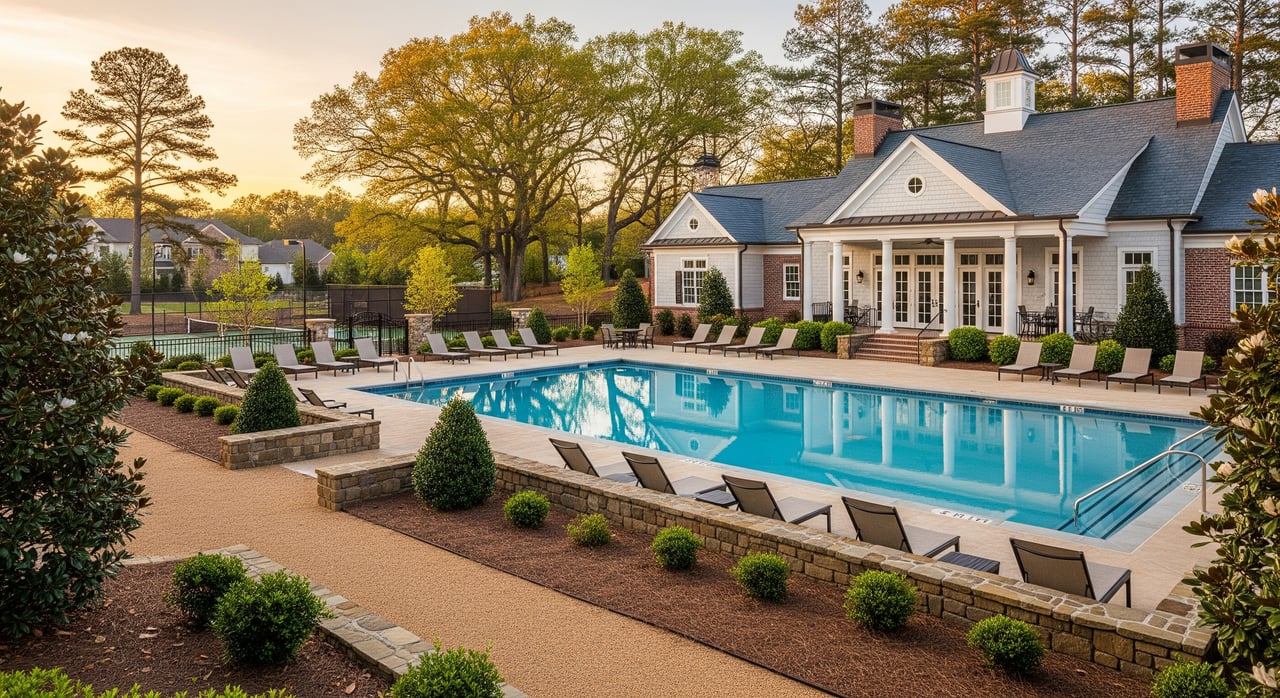
Homeowners’ associations are private organizations that manage common property, enforce community rules, and fund services through dues. In Chatham County, you will find everything from small subdivisions with a simple entrance and shared landscaping to master-planned communities with pools, trails, and clubhouses.
Local growth around the Triangle has created more amenity-driven neighborhoods, which often means higher budgets and broader services. Some rural areas include private roads or shared water and wastewater systems, so the HOA may be responsible for maintaining those items rather than the county.
Types you will see
- Single-community HOAs that handle entrance features, landscaping, and rules.
- Amenity master associations that operate pools, fitness centers, trails, parks, and sometimes private roads or utilities.
- Condominium or townhome associations that fund exterior maintenance for common elements and building reserves.
- Multi-layer setups where a master HOA manages shared regional amenities and sub-associations handle neighborhood needs.
Why fees vary
- Rural subdivisions often have lower dues that cover limited services like landscaping and private road upkeep.
- Amenity-heavy communities require larger budgets for facilities, staffing, and maintenance.
- If a neighborhood has private infrastructure, the HOA must fund operations and repairs, which can increase dues.
What HOA fees usually cover
HOA coverage differs by community. Always review the budget and governing documents to confirm what is included.
Maintenance and landscaping
- Care for common areas: mowing, tree work, irrigation, signage, and entrance monuments.
- Upkeep for shared spaces: sidewalks, trails, playgrounds, and open green areas.
Amenities and lifestyle
- Pools, clubhouses, fitness rooms, sports courts, dog parks, and event programming.
- Staffing and supplies for amenities when applicable.
Management, insurance, and utilities
- Property management, bookkeeping, billing, mailings, and annual meetings.
- Insurance for common areas and liability coverage. Your personal home or condo policy is separate.
- Utilities serving common areas: exterior lighting, irrigation, and clubhouse utilities. Some associations include community trash service or bill for water and sewer through the HOA.
Reserves, roads, and infrastructure
- Reserve funding for major replacements such as roofs on common buildings, pool resurfacing, or asphalt.
- Private roads, stormwater systems, culverts, signage, and snow removal if provided. In many places, private roads are not maintained by the county or municipality.
Extras some communities include
- Operations for private water or wastewater systems where present.
- Exterior services in certain condominium projects, such as periodic painting for shared elements.
- Social programming and community communications.
How fees are structured
Dues schedules and tiers
- Associations may bill monthly, quarterly, or annually.
- Many communities use a flat fee per lot or unit. Others use tiered fees based on unit type or amenity access.
Reserves and special assessments
- Strong HOAs use reserve studies to plan for future replacements and set annual savings targets.
- When reserves are too low, boards may raise dues or levy a special assessment to cover large or unexpected repairs.
Financing and resale impacts
- For condominiums and similar projects, lenders can require certain insurance and reserve levels.
- High delinquency rates or inadequate reserves can limit eligibility for some loan programs, which may affect marketability.
Buyer due diligence checklist
Request these items early so you understand costs, rules, and risks before you commit:
- Governing documents: CC&Rs, bylaws, rules, and architectural guidelines.
- Current budget, plus 2–3 years of financial statements and a balance sheet.
- Most recent reserve study and history of reserve contributions.
- Board and annual meeting minutes from the last 12–24 months.
- Association insurance certificates and policies, including coverage limits and deductibles.
- List of pending or threatened litigation and potential costs.
- Records of special assessments over the last 5 years and any planned projects.
- Delinquency report and collection policy.
- Management contract and major vendor agreements.
- Rules on rentals, pets, exterior changes, and short-term rentals.
- Transfer, resale, or disclosure fees due at closing.
- Any infrastructure warranties or long-term maintenance plans.
Before closing, confirm the current dues, timing of the next increase, whether utilities are billed through the HOA, and whether any approved special assessments will be owed by you as the new owner. In North Carolina, many associations provide a resale certificate or disclosure package on request, so plan ahead.
Seller considerations
Prep to list
- Gather your documents: governing docs, budgets, reserve study, insurance, and recent minutes.
- Clear any unpaid dues or fines and disclose known issues.
- Resolve exterior items that fall under HOA control to avoid disputes during contingencies.
Pricing and positioning
- Compare net cost of ownership: HOA dues plus typical utilities and taxes.
- Highlight what your fee includes, such as trash, water, or amenity access that offsets other expenses.
Signals of a stable association
- Well-funded reserves and recent maintenance on key assets.
- Clear communication from the board and consistent enforcement of rules.
- Limited litigation and a track record without frequent special assessments.
Red flags and smart next steps
Watch for these issues during review:
- No reserve study or very low reserves given the community’s age and assets.
- Frequent special assessments or steep increases without a clear plan.
- High delinquency rates that indicate collection or cash flow problems.
- Ongoing litigation or repeated legal disputes.
- Unclear responsibility for private roads or private water and wastewater systems.
- Insurance gaps or large deductibles that could trigger assessments after a loss.
If concerns arise, ask for more documentation, consult an experienced agent or real estate attorney, and confirm any financing implications with your lender, especially for condos or multi-unit projects. If you plan to rent or operate a short-term rental, verify association rules as well as any county registration or permit requirements.
Ready to evaluate a specific community in Chatham County or compare HOA budgets across options? Reach out to Rhonda Szostak for clear guidance, a practical document review, and neighborhood-level insight.
FAQs
What do HOA fees typically include in Chatham County?
- Common-area maintenance, amenities, management, insurance, utilities for shared spaces, reserves, and sometimes private roads or private utility systems.
Why are HOA fees higher in amenity communities?
- Pools, clubhouses, fitness spaces, trails, staffing, and larger common areas carry ongoing costs for maintenance, insurance, and utilities.
Can HOAs in Chatham County maintain private roads?
- Yes, when roads are private the HOA usually funds maintenance, repairs, and related infrastructure rather than the county.
What is a special assessment and when does it happen?
- It is a one-time charge to owners when reserves are insufficient to cover large or unexpected capital repairs or projects.
What documents should I review before buying in an HOA?
- CC&Rs, bylaws, rules, budget, financials, reserve study, minutes, insurance, litigation disclosures, delinquency report, and any planned assessments.
Do HOA fees replace property taxes or utilities?
- No, dues are separate from property taxes, and utilities are only covered if the association explicitly includes them in its budget or billing.